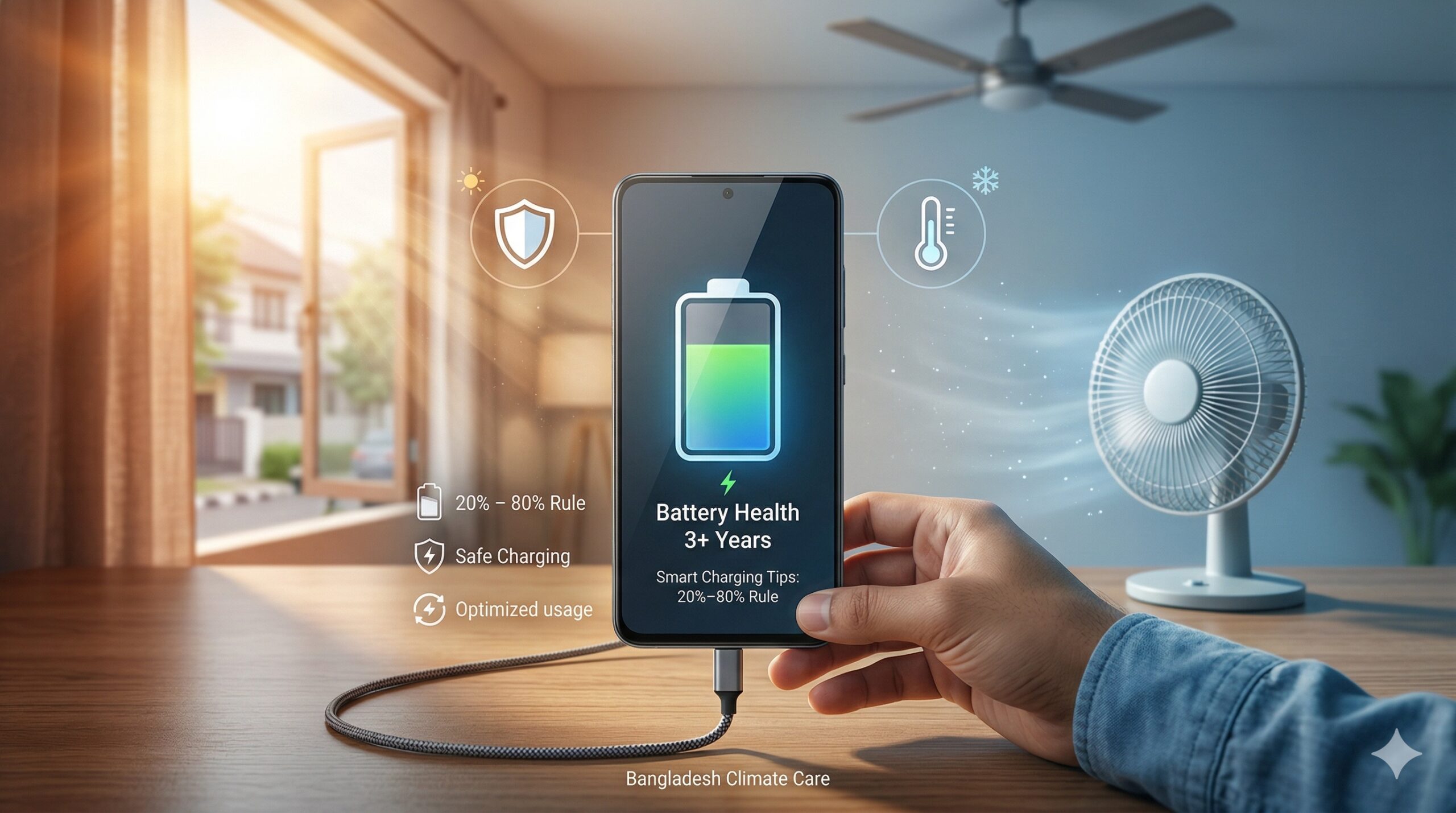
Bangladesh’s tropical climate—with temperatures soaring above 35°C during summer and humidity levels consistently above 70%—creates a challenging environment for smartphone batteries. If you’ve noticed your phone draining faster during Dhaka’s scorching April or your battery swelling during the monsoon season, you’re not alone. However, with the right care strategies, you can extend your Android phone’s battery health to last 3+ years, even in Bangladesh’s demanding climate.
Understanding Battery Degradation in Bangladesh’s Climate
Lithium-ion batteries, which power virtually all modern smartphones, are particularly sensitive to heat and humidity. In Bangladesh, where summer temperatures regularly exceed 38°C and the monsoon brings extreme humidity, batteries face accelerated wear. Heat causes the electrolyte inside batteries to break down faster, while humidity can lead to internal corrosion over time.
According to battery research, every 10°C increase in operating temperature can reduce battery lifespan by up to 50%. This means that choosing the right smartphone with good thermal management is your first line of defense against premature battery degradation.
Optimal Charging Practices for Longevity
The 20-80 Rule
One of the most effective ways to preserve battery health is following the 20-80 charging rule. Avoid letting your battery drop below 20% or charging it beyond 80% regularly. Keeping your battery in this middle range reduces stress on the lithium-ion cells and significantly extends their lifespan.
Many modern Android phones, including models from Samsung, Xiaomi, and OnePlus, now include battery protection features that limit charging to 85%. If your device has this option (usually found under Battery or Device Care settings), enable it immediately.
Avoid Overnight Charging
While convenient, overnight charging keeps your battery at 100% for extended periods—a state that accelerates degradation, especially in Bangladesh’s warm nighttime temperatures. Instead, charge your phone during the day when you can monitor it, or use smart plugs with timers to cut power after a set duration.
Use Original or Certified Chargers
Bangladesh’s electronics market is flooded with counterfeit chargers that lack proper voltage regulation. These cheap alternatives can cause battery damage through inconsistent power delivery. Always use original chargers or certified alternatives from reputable brands. When shopping for quality smartphones like the vivo Y31d 8GB/256GB or Infinix Note 60 8GB/256GB, ensure you also get authentic accessories to protect your investment.
Temperature Management Strategies
Keep Your Phone Cool
During Bangladesh’s summer months, avoid leaving your phone in direct sunlight or inside vehicles where temperatures can reach 60°C or higher. If you work outdoors or commute in rickshaws, keep your phone in a bag rather than your pocket, where body heat adds to the ambient temperature.
Remove phone cases during charging, as they trap heat. This simple step can reduce charging temperatures by 3-5°C—a significant difference for battery longevity.
Air-Conditioned Environments
If you work in an air-conditioned office, take advantage of the cooler environment for charging. The 20-25°C temperature range is ideal for battery health. However, avoid extreme temperature transitions—bringing a hot phone directly into heavy AC can cause condensation inside the device.
For those considering AC upgrades for home or office, maintaining moderate temperatures (24-26°C) benefits both battery health and energy efficiency.
Managing Humidity and Moisture
Monsoon Precautions
Bangladesh’s monsoon season (June to October) brings extreme humidity that can penetrate smartphone seals. While most modern phones have IP ratings for water resistance, prolonged exposure to humidity can still affect battery performance.
Store your phone in dry environments when possible. Use silica gel packets in your desk drawer or bag to absorb moisture. If your phone gets wet, power it off immediately and dry it thoroughly before charging.
Avoid Condensation
Moving between air-conditioned and outdoor environments creates condensation risk. If you must make this transition frequently, keep your phone in an insulated bag to slow temperature changes and prevent moisture accumulation.
Smart Software Settings
Battery Saver and Adaptive Features
Modern Android versions include intelligent battery management features that learn your usage patterns and optimize background processes. Enable Adaptive Battery in your settings—this feature limits power to rarely-used apps without compromising your experience.
For devices with AMOLED or OLED screens (common in mid-range and flagship phones), use dark mode and reduce screen brightness. OLED displays consume significantly less power with darker content, reducing charging frequency and heat generation.
Disable Unnecessary Features
GPS, Bluetooth, and mobile data constantly running in the background generate heat and drain battery. Disable these features when not in use. In Bangladesh’s data-heavy usage environment, switching to Wi-Fi when available reduces battery strain and heat generation.
Update Regularly
Manufacturers frequently release updates that include battery optimization improvements. Keep your Android OS and apps updated to benefit from these enhancements. However, research updates before installing—some poorly optimized updates can worsen battery performance.
Physical Care and Maintenance
Regular Cleaning
Bangladesh’s dusty environment can clog charging ports, causing poor connections and heat buildup during charging. Clean your charging port monthly using compressed air or a soft brush. Ensure the phone is powered off during cleaning.
Avoid Physical Stress
Battery swelling is more common in hot, humid climates. Avoid placing heavy objects on your phone or storing it in tight pockets where pressure can damage the battery structure. If you notice your phone’s back panel bulging or the screen separating, stop using it immediately and seek professional service.
Professional Battery Checks
Consider having your battery health checked annually at authorized service centers. Many manufacturers offer battery diagnostics that can identify degradation before it becomes problematic. This is especially important for phones 2+ years old.
Optimizing App and System Usage
Identify Battery-Draining Apps
Use Android’s built-in battery usage monitor (Settings > Battery > Battery Usage) to identify power-hungry apps. Social media apps, particularly those with auto-playing videos, are common culprits. Limit background activity for these apps or use their lite versions.
Limit Background Processes
Restrict background data and activity for non-essential apps. Go to Settings > Apps > Select App > Battery > Background restriction. This prevents apps from running unnecessarily and generating heat when you’re not actively using them.
Screen-On Time Management
Your display is typically the largest battery consumer. Reduce screen timeout to 30 seconds or 1 minute. Lower brightness to comfortable levels—in Bangladesh’s bright outdoor conditions, even 50% brightness is often sufficient with adaptive brightness enabled.
Storage Practices for Extended Non-Use
If you’re switching devices or storing a phone for extended periods, proper storage is crucial in Bangladesh’s climate:
- Charge to 50% before storage—neither full nor empty
- Power off completely rather than leaving in standby
- Store in cool, dry place with temperatures between 15-25°C
- Check monthly and recharge to 50% if needed
- Use airtight containers with silica gel to combat humidity
Choosing Battery-Friendly Phones
When purchasing a new device, consider battery-friendly features:
- Large battery capacity (5000mAh+) reduces charging frequency
- Efficient processors (like Snapdragon 8 series or MediaTek Dimensity) generate less heat
- Fast charging with temperature control minimizes heat exposure
- Battery care features built into the OS
Brands like Samsung, OnePlus, and Xiaomi now include comprehensive battery protection in their flagship and mid-range offerings, making them excellent choices for Bangladesh’s challenging climate.
Real-World Results: What to Expect
Following these practices diligently, you can realistically expect:
- Year 1: 95-100% battery health retention
- Year 2: 85-90% battery health retention
- Year 3: 75-85% battery health retention
- Year 4: 70-80% battery health retention (exceeding the 3-year target)
These figures assume consistent care and moderate usage (1-2 full charge cycles per day). Heavy users may see slightly faster degradation, but proper thermal management remains the most critical factor.
When to Replace Your Battery
Even with excellent care, batteries eventually degrade. Consider replacement when:
- Battery health drops below 70%
- Phone unexpectedly shuts down at 20-30% charge
- Charging takes significantly longer than when new
- Physical swelling or excessive heat during normal use
In Bangladesh, authorized service centers for major brands offer battery replacement services. Always choose genuine batteries over third-party alternatives, as counterfeit batteries pose safety risks and rarely include proper thermal protection.
Conclusion
Bangladesh’s hot and humid climate demands extra attention to smartphone battery care, but with consistent practices—proper charging habits, temperature management, humidity protection, and smart software optimization—you can easily extend your Android phone’s battery life beyond 3 years. The key is treating your battery with care from day one rather than waiting for degradation to become noticeable.
By investing a few minutes daily in these protective measures, you’ll save thousands of taka in battery replacements and maintain your phone’s performance for years to come. Whether you’re using a budget-friendly option or a premium flagship, these principles apply universally to lithium-ion batteries in Bangladesh’s demanding climate.