
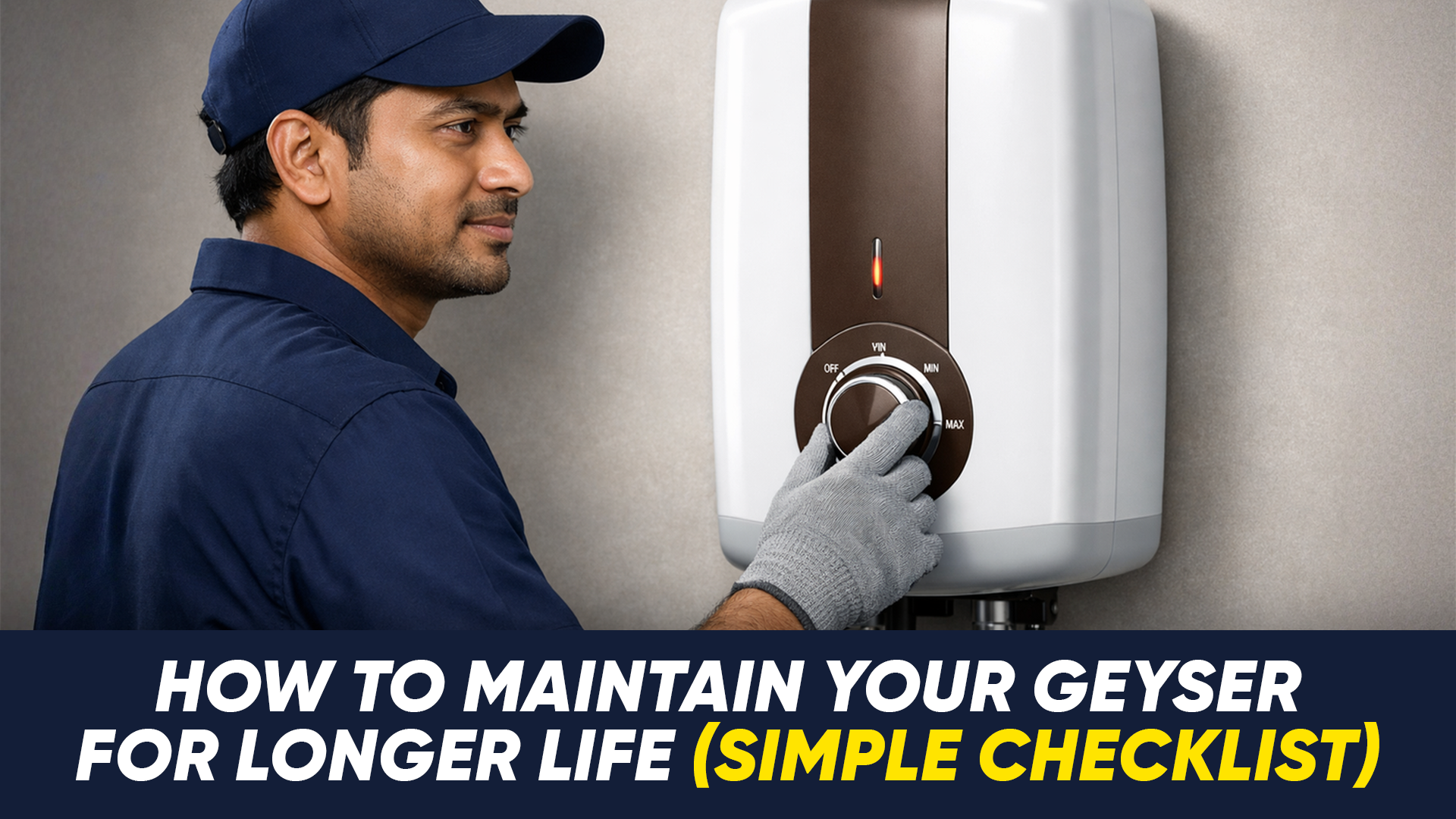
A Simple Checklist That Prevents Problems & Reduces Complaints
A geyser is one of the most important home appliances, especially during winter. Yet, most geyser issues like water not heating properly, leakage, tripping, or high electricity bills happen because of poor maintenance. But the good news is, a few simple habits and regular checks can extend your geyser’s life for years and prevent most common problems.
Here’s a practical checklist every geyser user should follow
1. Always Switch Off Power After Use
Many users leave the geyser switched on all the time, thinking it saves effort.
Why this matters:
- Continuous power stresses the heating element
- Increases electricity consumption
- Raises the risk of overheating and electrical issues
What to do?
- Turn off the geyser immediately after use
- Use a reminder or timer if needed
2. Do Not Overheat the Water
Setting the thermostat too high is a common mistake.
Why it’s harmful:
- Excessive heat damages the heating element
- Causes pressure build-up inside the tank
- Leads to frequent safety valve leakage
Best practice:
- Set temperature between 50°C-60°C
- This is safe, energy-efficient, and sufficient for daily use
3. Check the Safety Valve Regularly
The safety valve protects your geyser from excess pressure.
Why it’s important:
- Prevents tank damage
- Releases extra pressure safely
What to check:
- Occasional water drops are normal
- Continuous dripping means pressure or valve issues
If ignored, valve problems can lead to tank damage or leakage.
4. Clean the Geyser Tank Periodically
Hard water causes mineral deposits inside the tank.
Problems caused by deposits:
- Slow heating
- Strange noises
- Increased power consumption
- Shorter geyser lifespan
Recommended cleaning:
- Once a year in hard water areas
- Once every 18-24 months in soft water areas
Professional servicing is strongly advised.**
5. Inspect Electrical Wiring & Plug
Loose or damaged wiring is a major safety risk.
Why this matters:
- Can cause power tripping
- Risk of short circuits
- Potential fire hazards
What to do:
- Use a dedicated power socket
- Avoid extension cords
- Get wiring checked during annual servicing
6.Do Not Run the Geyser Without Water
Switching on a geyser without water inside can permanently damage it.
What happens:
- Heating element burns instantly
- Internal parts get damaged
- Warranty may become void
Always ensure water supply before switching on.
7. Service Your Geyser Once a Year
Many users skip servicing until a problem appears.
Why annual servicing helps:
- Detects issues early
- Improves heating efficiency
- Extends product life
- Reduces unexpected breakdowns
Preventive care is always cheaper than repairs.
8. Use an Authorized Technician Only
Untrained repair work can cause more harm than good.
Risks of unauthorized service:
- Improper repairs
- Safety hazards
- Warranty cancellation
Always choose authorized or brand-recommended technicians.
Common Geyser Problems You Can Avoid
By following this checklist, you can prevent:
- Water not heating properly
- Frequent power tripping
- Leakage issues
- Noisy operation
- High electricity bills
- Early product failure
A geyser doesn’t fail suddenly, it shows warning signs. Regular maintenance and correct usage can keep your geyser running safely and efficiently for years. When buying a geyser, always choose official products with proper warranty and service support. Smart usage today means fewer complaints tomorrow.





)
&description=&image=https://www.pickaboo.com/blog/wp-content/uploads/2026/01/Blog-geyser-1024x576.png)