How Monsoon Humidity Affects Your AC
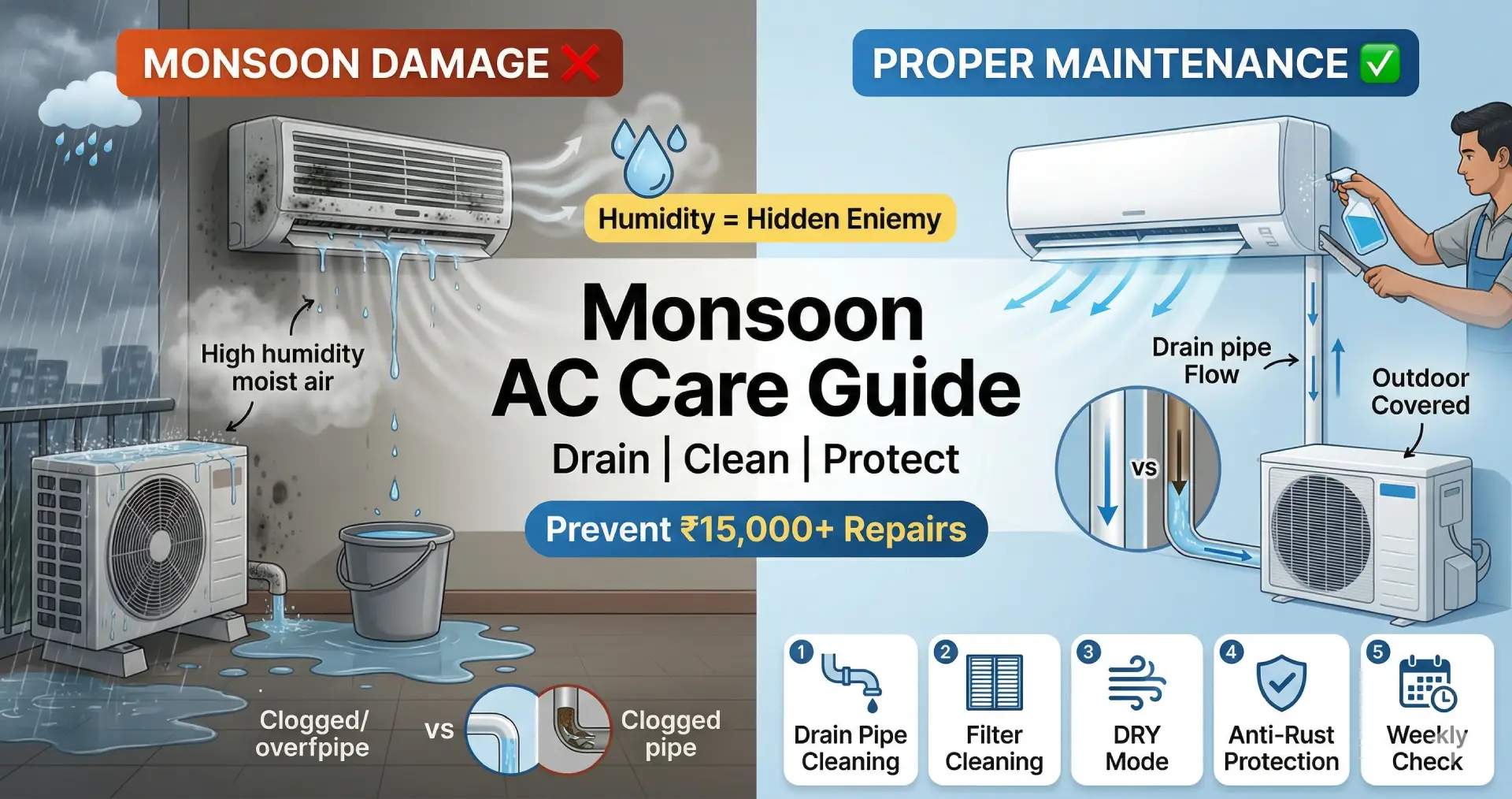
- Excess Condensation: ACs produce 2–5 liters of water per hour
- Algae Growth: Blocks drain pipes quickly
- Mold Formation: Causes bad smell and health issues
- Rust & Corrosion: Damages outdoor unit
- Drainage Blockage: Leads to water leakage
Weekly Maintenance Checklist
- Check drain pipe for smooth water flow
- Inspect indoor unit for water leakage
- Clean outdoor drainage area
Bi-Weekly Maintenance
- Flush drain pipe with bleach solution (1:10 ratio)
- Clear pipe using wire or cleaning tool
- Inspect coils for mold buildup
Monthly Maintenance
- Clean or replace air filters
- Check outdoor unit for rust
- Inspect pipe insulation
Best AC Settings During Monsoon
- Mode: DRY / Dehumidify
- Temperature: 25–26°C
- Fan Speed: Low or Auto
These settings reduce humidity, improve comfort, and save 20–30% electricity.
Common Problems & Quick Fixes
- Water Leakage: Clean drain pipe immediately
- Bad Smell: Clean coils and filters
- Low Cooling: Replace dirty filters
- Noise Issues: Check outdoor unit for debris
Emergency Tips During Heavy Rain
- Turn off AC if leakage starts
- Keep bucket under indoor unit
- Avoid using AC during flooding
- Restart only after complete drying
Post-Monsoon Maintenance
- Replace air filters
- Deep clean drain pipe
- Apply anti-corrosion spray
- Schedule professional servicing
Recommended Products
- AC Cleaning Spray
- Drain Cleaning Kit
- Anti-Corrosion Spray
- Replacement Filters
Conclusion
Monsoon AC maintenance is essential in Bangladesh’s humid climate. Weekly checks, proper settings, and preventive care can save thousands in repair costs and ensure uninterrupted cooling. Protect your AC investment with regular maintenance and smart usage during the rainy season.